Play Rummy
The original meld-and-discard game - lay down sets and runs and be first to go out.How to Play Rummy
In a nutshell: The original meld-and-discard game - lay down sets and runs and be first to go out. You play with 1 deck (52 cards), it's rated easy to learn, and be first to empty your hand and win.
Rummy is the original meld-and-discard card game, and the whole Rummy family grew out of it. Two or more players are dealt ten cards each from a single deck. On your turn you draw the top card of the stock or the upcard from the discard pile, then you may lay melds down on the table - sets of three or four cards of the same rank, or runs of three or more cards in sequence in one suit - before discarding one card to end your turn. Unlike Gin Rummy, your melds go face up on the table where everyone can see them, and you can lay off cards onto anyone's melds. The first player to get rid of every card in their hand goes out and wins, scoring the deadwood left in the other players' hands. Aces are low, face cards count 10.
Rummy at a glance
| Goal | Be the first player to get rid of all your cards by melding them onto the table and discarding. When you play your last card, you go out and win the hand. |
|---|---|
| Decks used | 1 standard 52-card deck - 52 cards in play |
| Difficulty | Easy to learn |
| Chance of winning | Be first to empty your hand and win |
| Family | Rummy Family |
Step by step
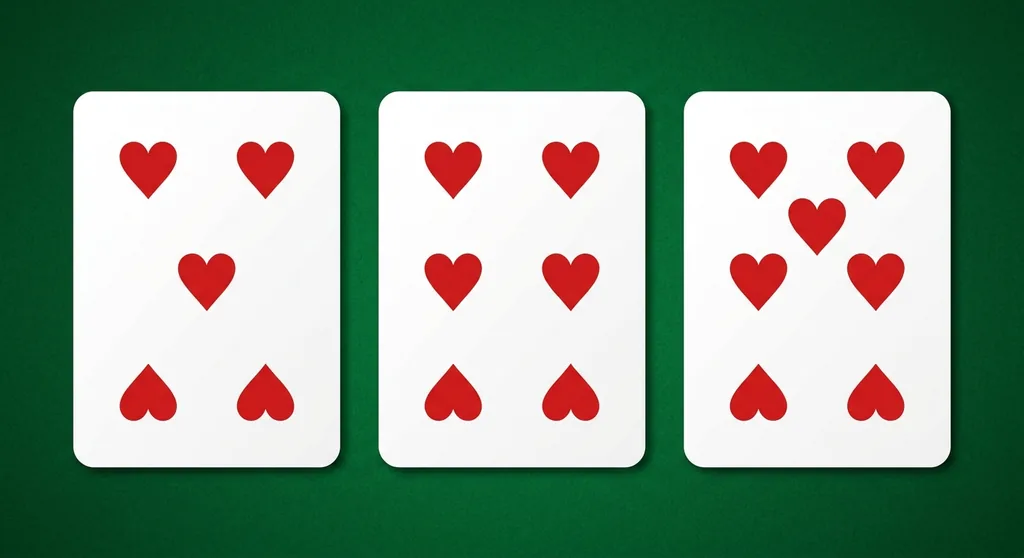
Goal
Be the first player to get rid of all your cards by melding them onto the table and discarding. When you play your last card, you go out and win the hand.
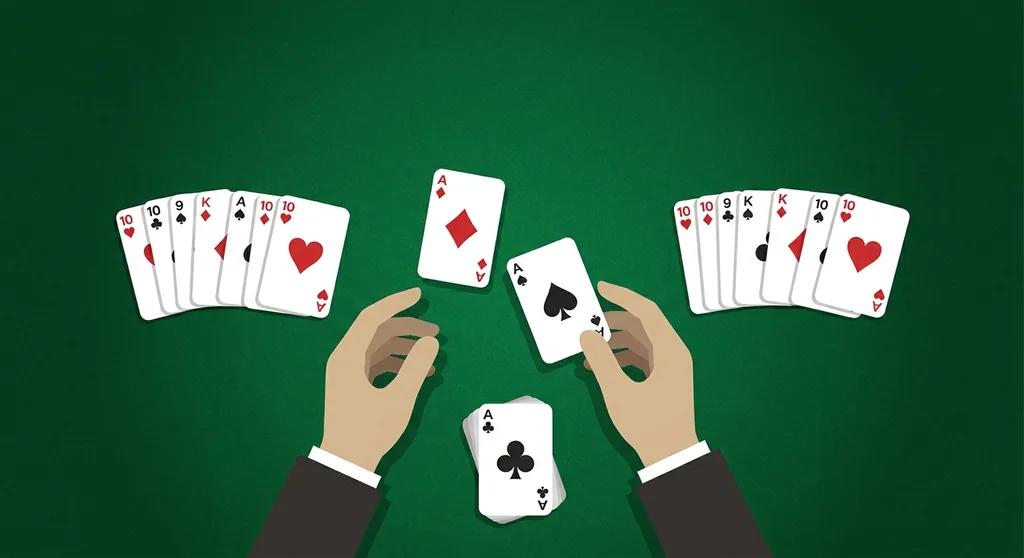
The deal
Deal ten cards to each player from a single 52-card deck. Turn the next card face up to start the discard pile, and set the rest face down as the stock.
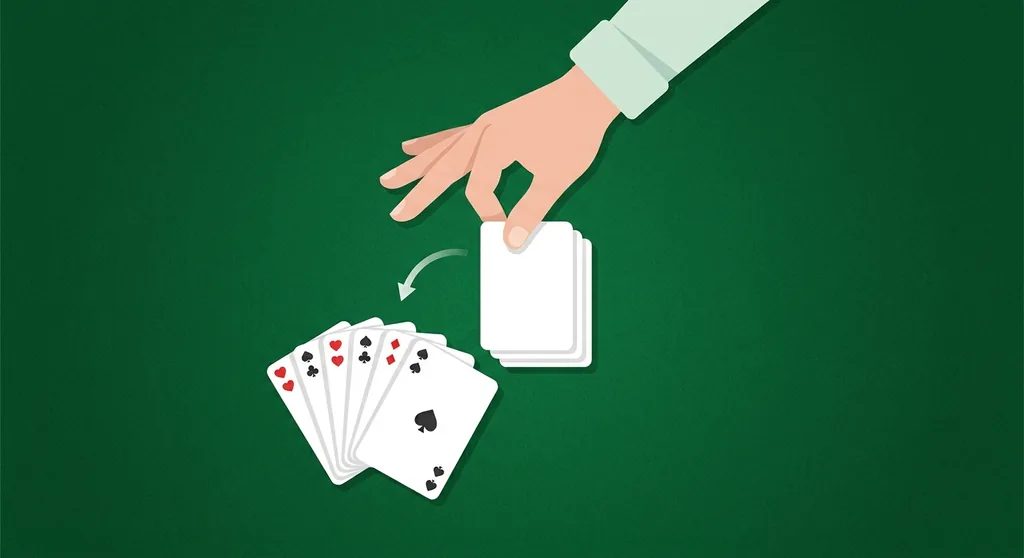
Draw a card
Start each turn by drawing the top card of the stock or taking the upcard from the discard pile. You always draw exactly one card before you can meld or discard.
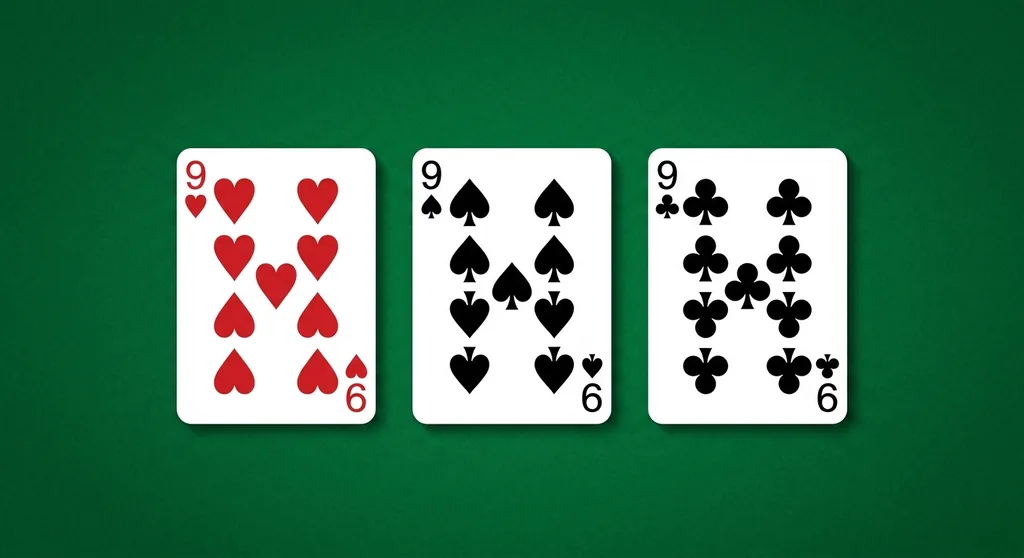
Meld sets & runs
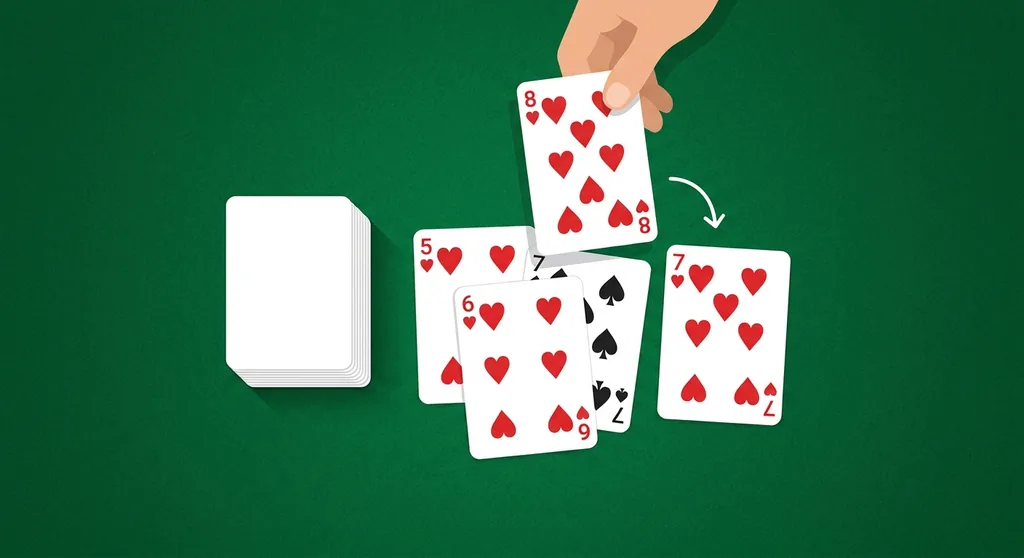
Lay melds face up on the table: a set is three or four cards of the same rank, and a run is three or more consecutive cards in one suit. Aces are low, so A-2-3 works but Q-K-A does not.
Lay off & go out
You may lay off cards onto any melds already on the table, yours or an opponent's. End every turn by discarding one card. Empty your hand to go out and win, scoring the deadwood left with the others.
History of Rummy
Rummy is the parent of one of the largest families in all of card games, and its melding idea - drawing, forming sets and runs, and discarding - underlies dozens of popular games including Gin Rummy, Canasta, and 500 Rum. Historians generally trace the family back to Conquian, a 19th-century game played in Mexico and the American Southwest, sometimes called Coon Can.
Conquian itself is often linked to still older draw-and-discard traditions, with some scholars pointing to Chinese ancestors such as Khanhoo and the tile game Mahjong, which share the core idea of collecting matched groups. However the lineage ran, by the late 1800s and early 1900s the melding game had reached the United States, where it took the name Rummy and spread rapidly.
Basic Rummy's simple, flexible rules made it a household staple and a natural base for endless variations. Publishers and players layered on new scoring, wild cards, and larger hands to create games like Gin Rummy in 1909 and Canasta in the 1940s. Today Rummy names both the specific basic game and the whole clan of games built on melding sets and runs.
How to Win Rummy: Strategy
💡 Top tip: Get your melds down early in basic Rummy to protect against an opponent going out suddenly and catching you with a full hand of deadwood.
Winning tips, in order of importance
- But balance speed with holding a card or two back, since laying every meld down tips your opponents off to what you are collecting.
- Lay off spare cards onto existing melds whenever you can - it empties your hand faster and denies those points to opponents.
- Ditch high cards early; if someone else goes out, unmatched face cards cost you 10 points each.
- Watch the discard pile - taking the upcard tells everyone what you want, so weigh the information you give away against the card you gain.
- Keep runs flexible by holding connected cards that can extend in either direction before you commit them to the table.
- Track which cards have been discarded so you know when a set or run you are chasing has become impossible.
Advanced tactics for Rummy
- Weigh the tempo of melding early against the information it leaks; laying everything down protects you from a sudden out but shows opponents exactly what you hold.
- Use lay-offs aggressively once melds are on the table, since every card you shed onto an existing group brings you closer to going out with no risk.
- Shed high cards while the hand is young, because unmatched face cards are the heaviest deadwood if someone else empties their hand first.
- Read the discard pile as a shared record - when both copies of a rank you need are gone, drop that plan and rebuild around live cards.
- Hold connectors that can extend a run in either direction rather than committing a run the moment it is legal, keeping more of your outs alive.
- Take the upcard only when the card is worth more than the information you reveal by grabbing it, since opponents will read your intent.
- When you sense an opponent is close to going out, dump your highest deadwood fast, accepting a weaker hand to limit the points you could be caught with.
Common Rummy mistakes to avoid
- Sitting on your melds too long - an opponent can go out suddenly and catch your whole hand as deadwood, so get melds down when the risk is high.
- Laying every card down the moment it is legal - it tips opponents off to what you are collecting, so balance speed against hiding your hand.
- Forgetting to lay off - adding spare cards onto melds already on the table empties your hand faster and denies those points to others.
- Keeping high cards while hunting one more meld - face cards are 10 points each of deadwood if someone else goes out first, so ditch them early.
Rummy Variations
Gin Rummy
The famous two-player offshoot where melds stay hidden in your hand and you end a hand by knocking or going gin rather than laying melds on the table.
500 Rum
A scoring version where melded cards count toward a 500-point target and you may dig into the discard pile for cards below the top, adding a distinctive twist.
Canasta
A partnership Rummy game played with two decks and wild cards, built around forming large seven-card melds called canastas for big bonuses.
Contract Rummy
A multi-round version where each deal requires a specific combination of sets and runs before you may lay down, growing more demanding as the game goes on.
Kalooki and Indian Rummy
Popular regional variants that use larger hands, wild cards, and jokers, keeping the meld-and-discard core while adding their own melding requirements.
Rummy FAQ
How do you play basic Rummy?
Each player is dealt ten cards from a single deck. On your turn you draw one card from the stock or the discard pile, optionally lay melds - sets and runs - face up on the table, lay off cards onto existing melds, and then discard one card. The first player to get rid of all their cards goes out and wins the hand.
What is the difference between Rummy and Gin Rummy?
The biggest difference is where your melds go. In basic Rummy you lay your sets and runs face up on the table during your turn and can lay off onto others' melds, and the first to empty their hand wins. In Gin Rummy you keep your melds hidden in your hand and end the hand by knocking or going gin. Gin is strictly two players, while Rummy can take several.
What counts as a meld in Rummy?
A meld is either a set or a run. A set is three or four cards of the same rank in different suits, such as three 9s. A run is three or more cards in consecutive order within one suit, such as 5-6-7 of hearts. Every meld you play goes face up on the table for everyone to see.
How many players can play Rummy?
Basic Rummy works well with two to four players, and some versions handle up to six by adding a second deck. With more players each person is usually dealt fewer cards, and the shared discard pile and table melds make for a livelier, more interactive game than two-player Gin.
How is Rummy scored?
When a player goes out, they score the total value of the cards left in the other players' hands. Face cards count 10, aces count 1, and other cards count their pip value. Players usually play multiple hands to a target total, and the deadwood caught in losers' hands is what drives the score.
What does laying off mean in Rummy?
Laying off is adding a card from your hand to a meld already on the table, whether it is your meld or an opponent's. For example, if a run of 4-5-6 of spades is showing, you can lay off the 3 or 7 of spades. Laying off is a fast way to unload cards and get closer to going out.
Are aces high or low in Rummy?
In basic Rummy aces are low, worth 1 point, and they sit below the 2 in runs, so A-2-3 is valid but Q-K-A is not. Some house rules let the ace be high or count more points, but the traditional game keeps it low, exactly as in Gin Rummy.
Do you have to meld on every turn?
No. Melding is optional - you may draw and simply discard, holding your cards to build bigger melds or to avoid tipping your hand. The only required actions each turn are to draw one card at the start and discard one card at the end. Many players hold melds back for a turn or two on purpose.
What happens when the stock runs out in Rummy?
If the stock is exhausted before anyone goes out, the common rule is to turn the discard pile over to form a new stock and keep playing. Some groups instead end the hand and score the cards in hand. Agreeing on this before you start avoids confusion late in a close game.
Can you go out all at once in Rummy?
In many versions you can go rummy by melding your entire hand in a single turn without having laid down any cards earlier, which often scores double. Otherwise you simply go out on the turn you play or lay off your last card, ending with a discard whenever the rules require one.
Where does the name Rummy come from?
The name's origin is debated. One popular idea links it to the older game Rum and its drinking theme, while others tie it to the British slang rum, meaning odd or strange. Whatever the source, Rummy became the umbrella name for a huge family of draw-and-discard games, including Gin.
Is Rummy a game of luck or skill?
Rummy blends both. The deal and the cards you draw involve luck, but choosing which melds to chase, when to lay off, which cards are safe to discard, and when to hold back to disguise your hand are all skills. Over several hands, the more observant and disciplined player usually comes out ahead.
Rummy guides & strategy
- Rummy vs Gin Rummy: what's the difference?
- Sets and runs: what counts as a meld?
- Browse every gin rummy question in the FAQ
Still have a question about Rummy? Browse the full gin rummy FAQ, look up a term like rummy family or easy to learn in the gin rummy glossary, or compare Rummy with the other games in the rules for every game.
Last updated .