Play Oklahoma Gin
Gin Rummy where the first upcard sets the knock limit - and spades double the deal.How to Play Oklahoma Gin
In a nutshell: Gin Rummy where the first upcard sets the knock limit - and spades double the deal. You play with 1 deck (52 cards), it's rated for gin veterans, and the upcard decides how low you must go.
Oklahoma Gin is Gin Rummy with one sharp twist: the first upcard sets the knock limit for the whole hand. Deal ten cards each, flip the 21st card, and read its value - that number becomes the most deadwood you are allowed to knock with. Turn up a 5 and you must get your deadwood down to 5 or less before you can knock; turn up a face card and you play standard Gin with a limit of 10. If the upcard is an ace, the limit is zero, meaning you must go gin to win the hand. And if that first upcard is a spade, the entire hand scores double, turning an ordinary deal into a high-stakes swing. Everything else - draw, discard, melds, undercuts, laying off - works exactly like Gin Rummy. First to 100 or 500 takes the match.
Oklahoma Gin at a glance
| Goal | Form melds and cut your deadwood below the limit set by the upcard, then knock. If the upcard demands it, only gin will do - and a spade upcard doubles everything. |
|---|---|
| Decks used | 1 standard 52-card deck - 52 cards in play |
| Difficulty | For Gin veterans |
| Chance of winning | The upcard decides how low you must go |
| Family | Gin Family |
Step by step
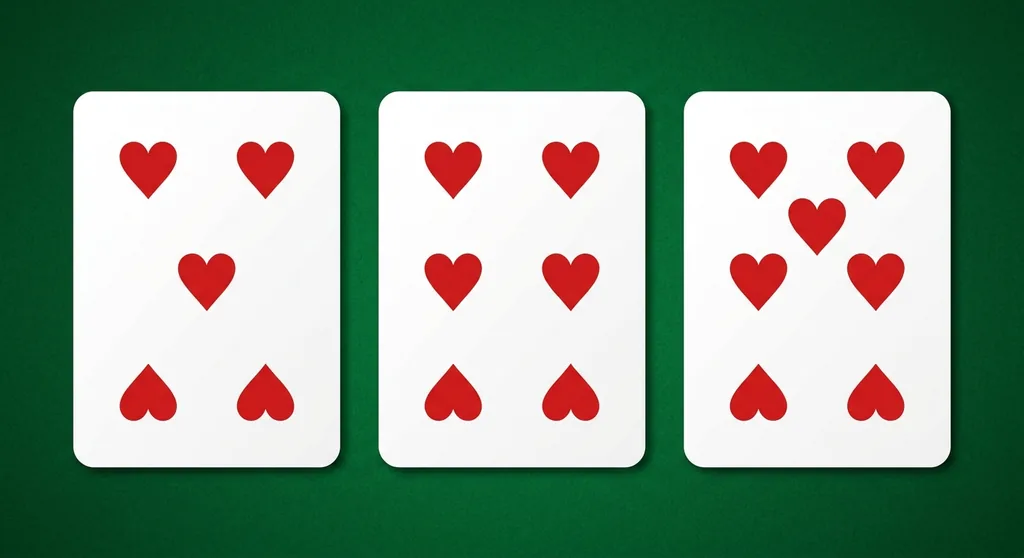
Goal
Form melds and cut your deadwood below the limit set by the upcard, then knock. If the upcard demands it, only gin will do - and a spade upcard doubles everything.
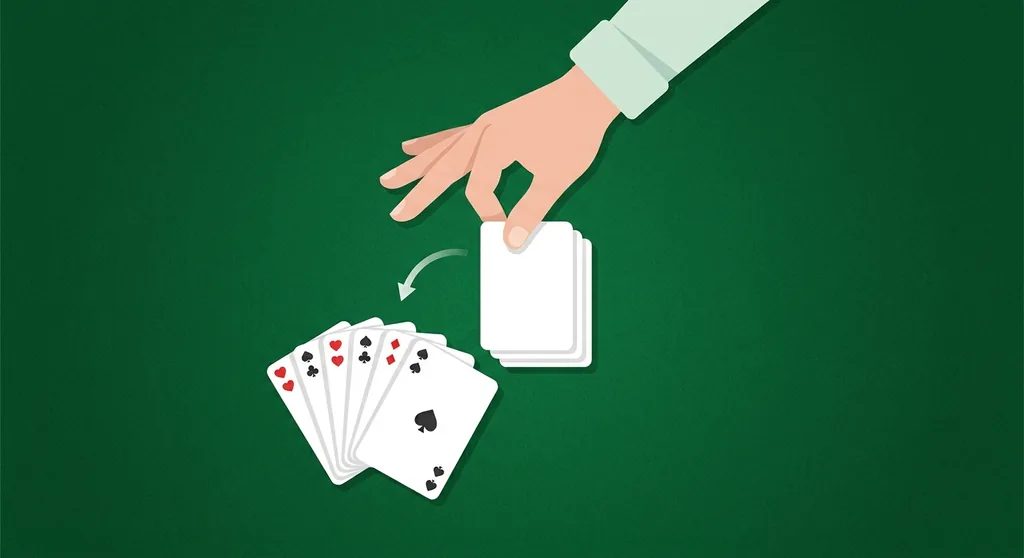
Deal & upcard
Ten cards each, then flip the 21st card. Its value is this hand's knock limit: a 7 means knock at 7 or less, an ace means you must go gin. A spade upcard doubles the hand's score.
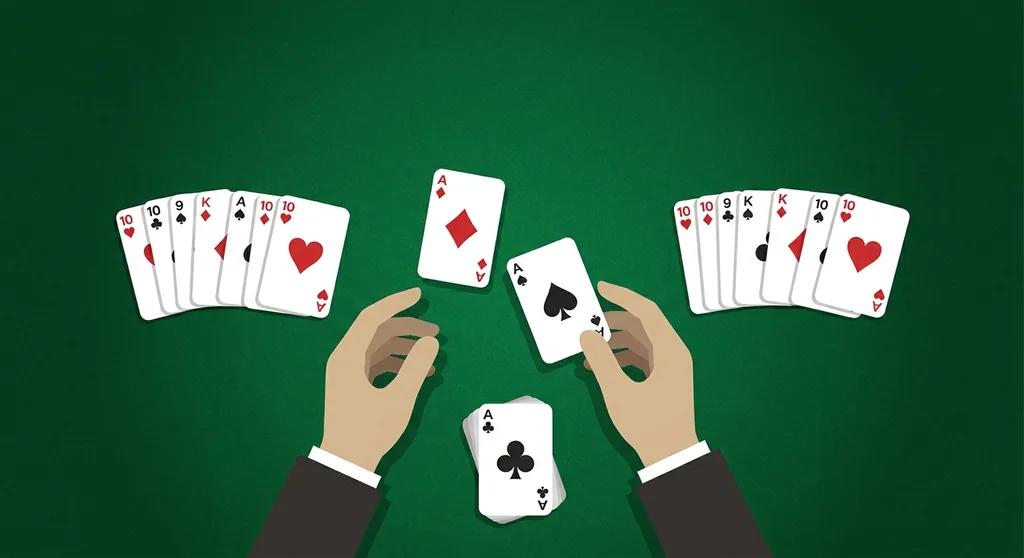
Draw or discard
Just like Gin, draw the top of the stock or take the upcard, then discard one card so your hand stays at ten. The non-dealer chooses the first upcard before play settles in.
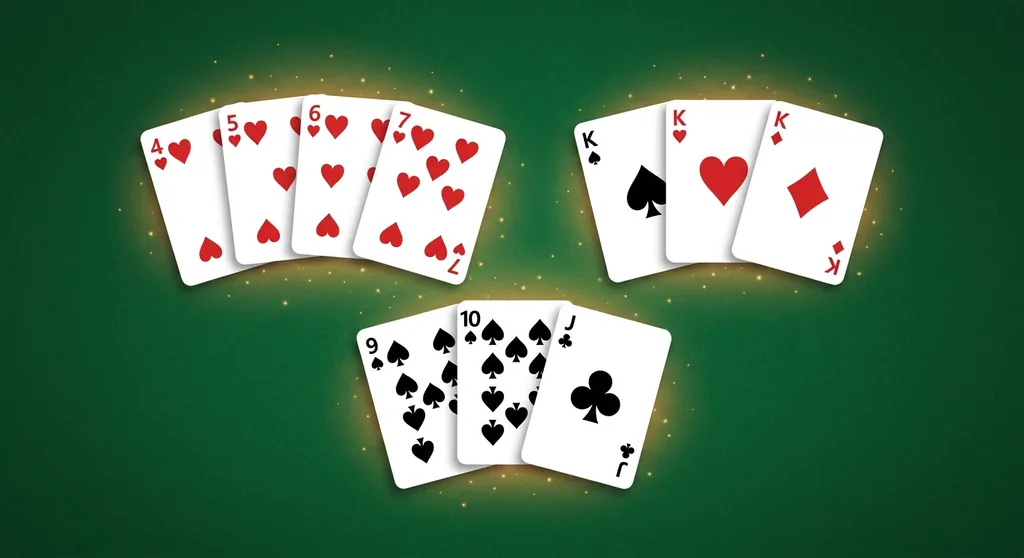
Melds
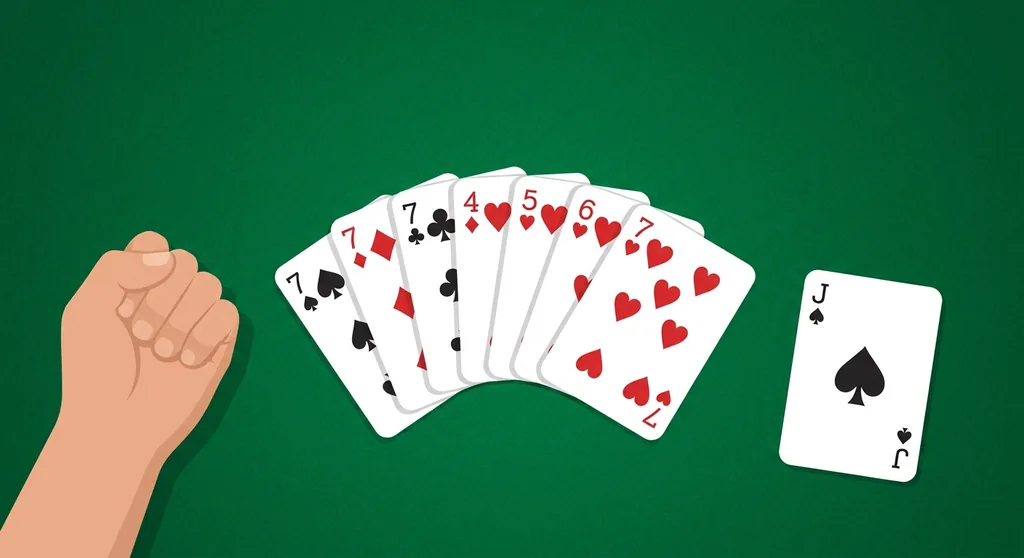
Build sets of matching ranks and runs of consecutive cards in one suit. Aces are low and count 1, face cards count 10. Only melded cards escape the deadwood tally.
Knock & going out
You may knock only when your deadwood is at or below the upcard's value. Go gin for the 25-point bonus. After a knock, your opponent lays off onto your melds, and a spade upcard doubles the final score.
History of Oklahoma Gin
Oklahoma Gin grew directly out of standard Gin Rummy, which Elwood T. Baker and his son C. Graham Baker introduced in New York in 1909. As Gin swept through 1930s and 1940s America, players began experimenting with house rules to add variety, and the idea of letting the upcard dictate the knock limit became one of the most enduring of those tweaks.
The variation took the name of the state, following a common habit of attaching regional labels to card-game variants. Whatever its precise origin, Oklahoma Gin caught on because the variable knock limit solved a complaint about standard Gin: that a player could too easily knock at the maximum count. By tying the limit to a random upcard, every hand demanded a fresh plan.
Over time Oklahoma Gin became the form of Gin Rummy used in many organized and tournament settings, valued for the extra skill it demands. The spade-doubling rule, borrowed from the drama of high-stakes card games, added a jolt of risk that suited competitive play. Today it stands alongside standard Gin and Straight Gin as one of the three most widely played members of the Gin family.
How to Win Oklahoma Gin: Strategy
💡 Top tip: Read the upcard first - a low knock limit changes everything, so plan for gin from the opening when the card is small.
Winning tips, in order of importance
- When the limit is an ace, stop thinking about knocking and play straight for gin, holding only cards that can meld.
- On a spade-upcard hand, every point is doubled, so tighten up: a bad undercut here hurts twice as much.
- With a face-card limit of 10 you are playing normal Gin - use standard knock timing and undercut caution.
- A low limit rewards flexible, two-way cards even more than usual, since you need almost every card to meld.
- Discard high deadwood early on tight-limit hands; you rarely have room to carry a 10-point card to the finish.
- Track the scoreboard against the doubling: on a spade hand, a strong lead can be defended or a deficit erased in a single deal.
Advanced tactics for Oklahoma Gin
- Set your whole plan from the upcard: a low limit means commit to gin from the start, a face-card limit means play standard Gin timing.
- On ace-upcard hands, discard aggressively toward a fully melded hand and never cling to deadwood you cannot use, since only gin scores.
- Treat spade-doubled hands as the swing deals of the match - protect a lead by playing safe, or gamble for gin when you must catch up.
- Because tight limits demand near-perfect hands, weight your keeps toward cards with two ways to meld and drop rigid single-purpose cards early.
- Watch the discard pile even more closely than in standard Gin; when a low limit leaves no margin, one wrong discard can hand your opponent the exact card they needed.
- Fold the doubling into your knock decision - on a spade hand, the extra undercut risk often means waiting for gin rather than a marginal legal knock.
- Keep a running count of the scoreboard and the current hand's multiplier together, so you always know whether to press for points or play defense.
Common Oklahoma Gin mistakes to avoid
- Forgetting to read the upcard - it sets your knock limit for the hand, so plan for gin from the start when that card is low.
- Trying to knock on an ace-upcard hand - the limit is zero there, so only a full gin can win and you should play for it, not a low count.
- Playing a spade-doubled hand carelessly - every point counts double, so a loose discard or a risky knock costs you twice as much.
- Holding rigid single-purpose cards on a tight-limit hand - you need almost every card to meld, so keep two-way cards and drop the rest early.
Oklahoma Gin Variations
Standard Gin Rummy
The parent game, where you may always knock at a deadwood of 10 or less regardless of the upcard, and no suit doubles the score. Oklahoma simply makes the limit variable.
Ace forces gin
The core Oklahoma rule that an ace upcard sets the knock limit to zero, so the hand can only be won by going gin. Some casual groups drop this and treat an ace as a limit of 1.
Spades double
The common scoring rule that a spade upcard doubles the entire hand. Certain house rules extend the idea, doubling for other conditions or stacking with the gin bonus.
Combined house rules
Some tables mix Oklahoma's knock limit with other Gin options, such as Big Gin bonuses or a larger undercut bonus, to tune the game's risk and reward.
Tournament Oklahoma
Organized play fixes the point target, the bonuses, and how the doubling interacts with them, standardizing what casual tables often decide by agreement.
Oklahoma Gin FAQ
What is Oklahoma Gin?
Oklahoma Gin is a popular variation of Gin Rummy in which the first upcard sets the knock limit for the hand. Instead of always being allowed to knock at 10 or less, you can only knock when your deadwood is at or below the value of that turned-up card, which makes every deal play a little differently.
How does the upcard set the knock limit?
After the deal, the 21st card is turned face up. Its rank is the maximum deadwood you may knock with that hand: a 4 means you must reach 4 or less, an 8 means 8 or less, and any 10 or face card means the normal limit of 10. The rule forces sharper play on low upcards.
What happens if the upcard is an ace?
An ace upcard sets the knock limit to zero, which means knocking is impossible and you can only win the hand by going gin. These hands turn into a pure race to meld all ten cards, and they reward careful card counting and patience over a quick low knock.
Why do spades double the score?
In the common Oklahoma rules, if the first upcard is a spade the entire hand is worth double. This raises the stakes of that deal, so both players tend to play more cautiously - a mistimed knock or an undercut counts for twice as much toward the match.
How is Oklahoma Gin different from regular Gin Rummy?
The core game is identical: deal ten cards, draw and discard, form sets and runs, knock or go gin, lay off, and watch for undercuts. The only changes are that the upcard caps your knock limit for the hand and, in many rule sets, a spade upcard doubles the score. Everything else follows standard Gin.
What counts as deadwood in Oklahoma Gin?
As in all Gin, deadwood is your unmatched cards. Face cards count 10, aces count 1, and other cards count their pip value. Because the upcard can force a very low knock limit, keeping your deadwood tiny matters even more here than in standard Gin Rummy.
Can you still be undercut in Oklahoma Gin?
Yes. If you knock and your opponent lays off and ends with deadwood equal to or below yours, they undercut you and score the difference plus the 25-point bonus. On a spade-doubled hand that undercut is worth twice as much, so knocking into a tight limit carries real risk.
Do you still get a gin bonus?
Yes, going gin still earns the 25-point bonus and cannot be undercut, exactly as in standard Gin Rummy. On ace-upcard hands, gin is the only way to score at all, and on spade hands the gin bonus and count are doubled along with everything else.
Where does the name Oklahoma Gin come from?
The variation's exact origins are unclear, but it took the state's name the way many regional card variants did, and it spread widely enough to become the standard form of Gin used in many tournaments. The variable knock limit is its defining feature.
Is Oklahoma Gin harder than standard Gin?
For most players, yes. The shifting knock limit removes the safety of always being able to knock at 10, so you must read each upcard and often commit to going gin. That extra planning is why the game is best suited to players already comfortable with standard Gin Rummy.
Are aces high or low in Oklahoma Gin?
Aces are low, worth 1 point, just as in standard Gin Rummy. In runs an ace sits below the 2, so A-2-3 of a suit is valid but Q-K-A is not. Note that an ace as the upcard has a special meaning - it forces you to go gin that hand.
What score do you play to in Oklahoma Gin?
Like Gin Rummy, Oklahoma Gin is typically played to 100 or 500 points over several hands, with a game bonus for reaching the target and a box bonus for each hand won. The spade-doubling rule can make individual hands swing the match far more than in standard Gin.
Oklahoma Gin guides & strategy
Still have a question about Oklahoma Gin? Browse the full gin rummy FAQ, look up a term like gin family or for gin veterans in the gin rummy glossary, or compare Oklahoma Gin with the other games in the rules for every game.
Last updated .