Play Gin Rummy Against the Computer
The classic two-player card game, plus the one thing most gin rummy sites lack: play a friend live in real-time multiplayer. No download, no signup.GinRummy.now is a free online gin rummy site with 5 games - Gin Rummy, Oklahoma Gin, Rummy and more - a shared daily deal, and real-time multiplayer that lets you challenge a friend head-to-head. There's nothing to download and no account required: just deal and play below.
Other games worth playing
How to Play Gin Rummy
In a nutshell: The classic two-player card game - knock, go gin, and undercut your way to 500. You play with 1 deck (52 cards), it's rated skill-heavy classic, and a knock beats a bad hand - skill decides most games.
Gin Rummy is the classic two-player card game, dealt ten cards each from a single 52-card deck. On your turn you draw one card - from the stock or the discard pile - then discard one, always working to arrange your hand into melds. A meld is a set of three or four cards of the same rank, or a run of three or more cards in sequence in one suit. Cards left unmatched are your deadwood, and face cards count 10 while aces count 1. When your deadwood totals 10 or less you may knock to end the hand, or hold out for gin - every card melded - to claim a 25-point bonus. The catch is the undercut: if your opponent ties or beats your deadwood after you knock, they steal the hand. First player to 100 (or 500) points wins the match.
Gin Rummy at a glance
| Goal | Arrange your ten-card hand into melds - sets and runs - so your leftover deadwood falls to 10 or less, then knock. Melding every card is gin. |
|---|---|
| Decks used | 1 standard 52-card deck - 52 cards in play |
| Difficulty | Skill-heavy classic |
| Chance of winning | A knock beats a bad hand - skill decides most games |
| Family | Gin Family |
Step by step
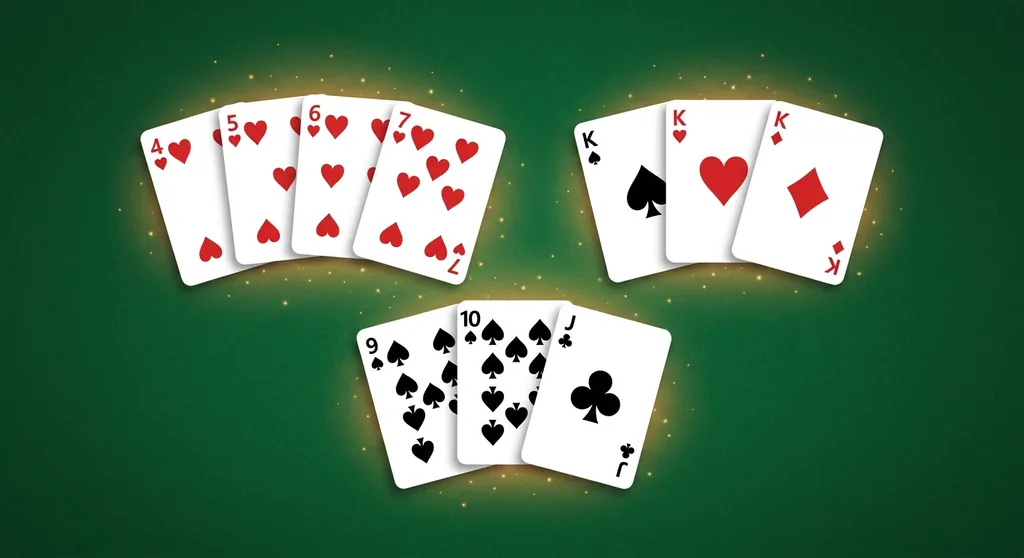
Goal
Arrange your ten-card hand into melds - sets and runs - so your leftover deadwood falls to 10 or less, then knock. Melding every card is gin.
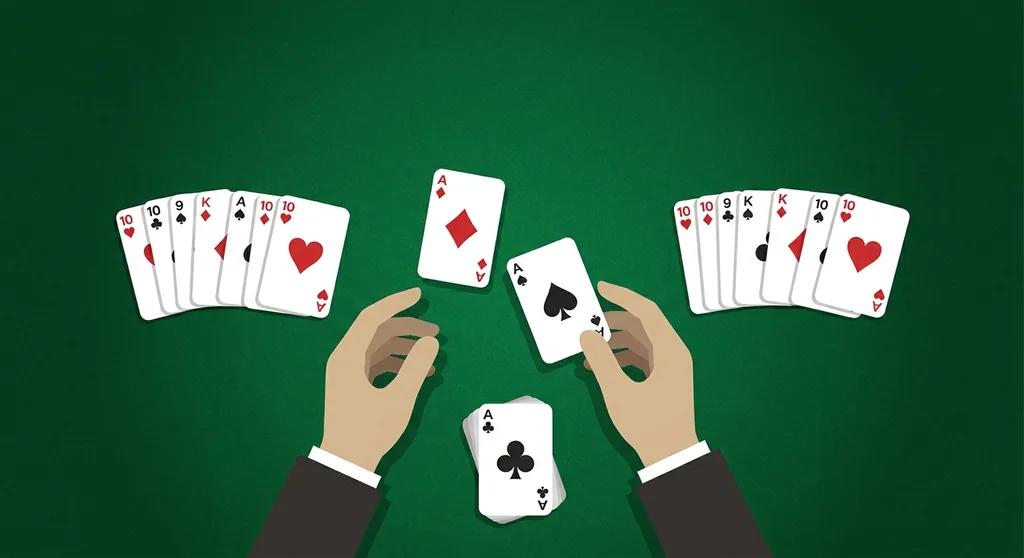
Deal & upcard
Each player gets ten cards; the 21st card is turned face up beside the stock as the first upcard. The non-dealer chooses whether to take it first.
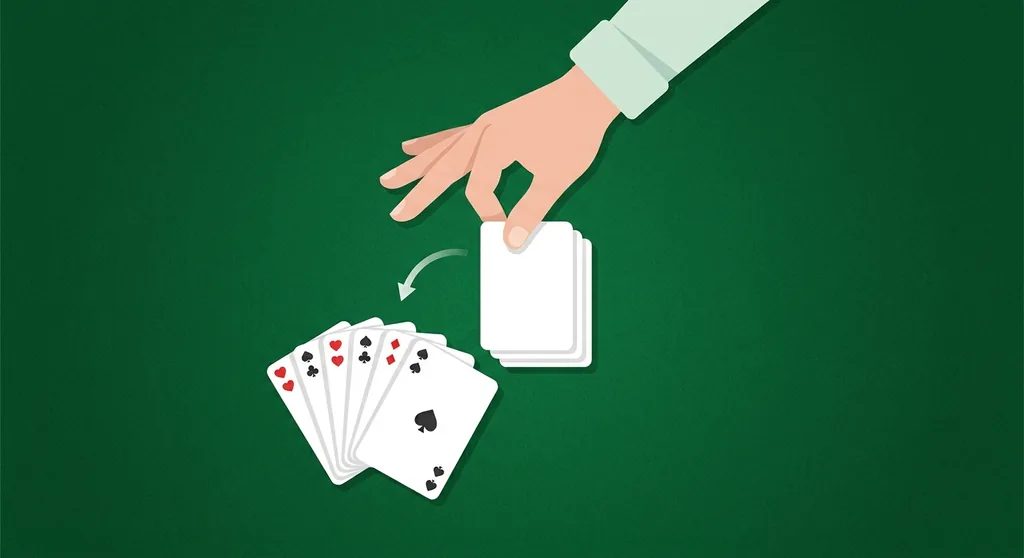
Draw or discard
On your turn, draw the top card of the stock or take the upcard from the discard pile, then throw one card onto the discard pile. Your hand always stays at ten cards.
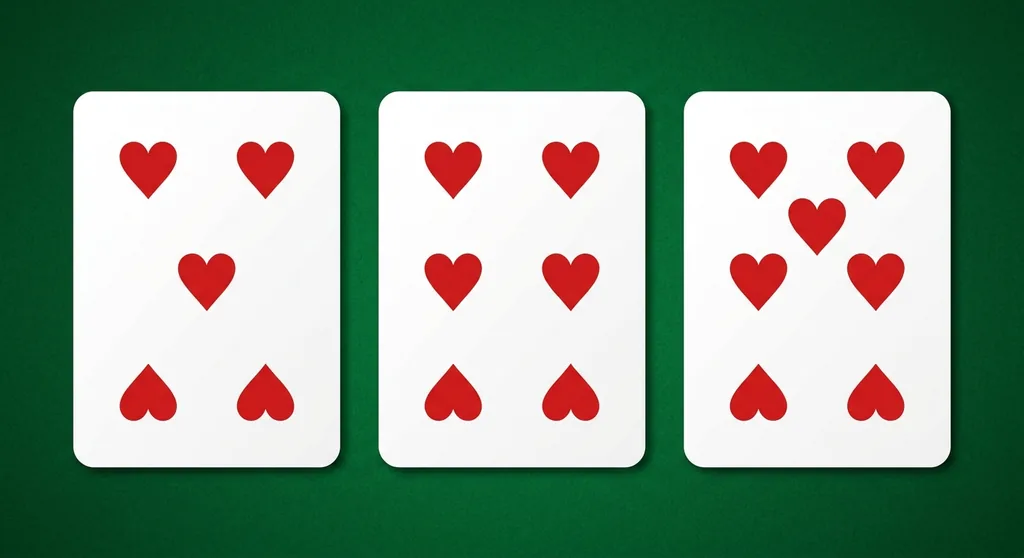
Melds
A set is three or four cards of the same rank, like three 8s. A run is three or more cards in a row of one suit, like 4-5-6 of hearts. Aces are low, so A-2-3 is a run but Q-K-A is not.
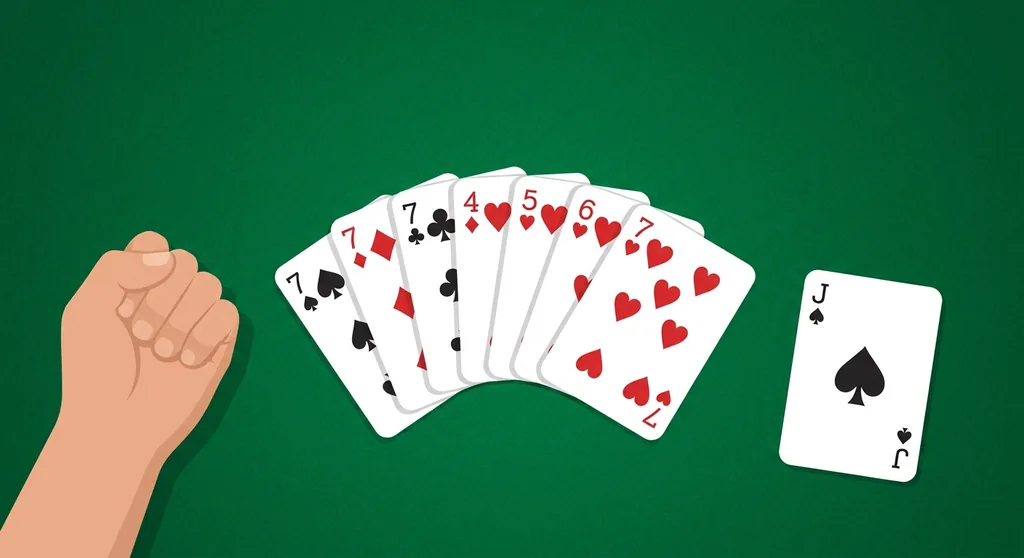
Knock & going out
Knock once your deadwood is 10 or less to end the hand and score the difference. Go gin - zero deadwood - for a 25-point bonus. After a knock, your opponent lays off cards onto your melds to cut their count.
History of Gin Rummy
Gin Rummy was invented in 1909 in New York by Elwood T. Baker, a whist teacher, with help from his son C. Graham Baker. Baker designed it as a faster, two-player relative of the older Rummy family, streamlining the game so hands ended quickly and skillful play was rewarded. The name is often said to nod to the alcohol theme of the older game Rum, with Gin as a play on the word.
The game exploded in popularity in 1930s and 1940s Hollywood, where it became the card game of choice on movie sets and in celebrity circles. Stars, writers, and studio executives played it between takes, and newspaper columns of the era treated a good Gin Rummy player as socially enviable. That glamorous association helped Gin Rummy spread from card rooms into ordinary American living rooms.
Gin Rummy belongs to the broad Rummy family, which traces back through Conquian - a 19th-century game from Mexico and the American Southwest, also called Coon Can - to earlier draw-and-discard games. What set Gin apart was its tight two-player format, the knock, and the scoring bonuses for gin and undercuts. Those ideas proved so durable that the basic rules have barely changed in over a century.
How to Win Gin Rummy: Strategy
💡 Top tip: Knock early when you are ahead on the scoreboard, but chase gin when you are behind and need the 25-point bonus to catch up.
Winning tips, in order of importance
- Watch every card your opponent draws from the discard pile - it tells you which melds they are building, so stop feeding that rank or suit.
- Discard high cards early while they are still relatively safe; a stranded King or Queen is 10 points of deadwood if the hand ends suddenly.
- Keep cards that work two ways - a 7 that can join both a set of 7s and a 6-7-8 run gives your hand flexibility.
- Count the discard pile: once a card is gone, the melds that needed it are dead, so stop holding its partners.
- Don't knock the instant you can if you are one card away from gin and the deadwood you would keep is tiny - the bonus and undercut protection are often worth the wait.
- Late in the hand, discard cards you know are safe - mates already discarded or melded - rather than live cards your opponent could use.
Advanced tactics for Gin Rummy
- Track your opponent's discards as a map of what they cannot use; a rank they threw away is safe for you to hold and often safe to feed back later.
- When they take a card from the discard pile, assume it completed or extended a meld, and immediately stop discarding cards near that rank or suit.
- Judge your knock by the scoreboard: with a healthy lead, knock the moment you are legal to deny them a comeback; when trailing, hold for gin and its 25 points.
- Value two-way cards highly - a card that can join either a set or a run keeps more of your outs alive and lowers the chance of a dead hand.
- Discard from the top down early in the hand, shedding face cards before they become dangerous deadwood, but only while they are not obviously useful to your opponent.
- Count how many cards of a key rank are still unseen; if the two copies you need are both likely gone, abandon that meld and rebuild around live cards.
- Guard against the undercut by not knocking with a full ten-point count when the hand has run long - a patient opponent with a low count can flip the score on you.
Common Gin Rummy mistakes to avoid
- Knocking the instant your deadwood hits 10 - a high knock invites an undercut, so wait for a lower count or go for gin when the hand has run long.
- Ignoring which cards your opponent takes from the discard pile - each pickup reveals a meld they are building, so stop feeding that rank or suit.
- Holding high cards too long - a stranded King or Queen is 10 points of deadwood if the hand ends suddenly, so shed face cards early while they are safe.
- Discarding live cards late in the hand - throw cards whose mates are already gone or melded instead of handing your opponent the exact card they need.
Gin Rummy Variations
Oklahoma Gin
The first upcard sets the maximum deadwood you may knock with for that hand, and an ace upcard forces you to go gin. It is the most popular tournament variation of Gin Rummy.
Straight Gin
Knocking is banned entirely, so the only way to go out is to meld your whole hand for gin. It rewards patience and card counting over quick, low knocks.
Hollywood Gin
Three games are scored at once on a three-column pad, so a single hand can count toward all three matches. It lengthens a session and raises the stakes of every deal.
Gin for three or four
With three players one sits out each hand, and with four players two partnerships take turns; the underlying draw, discard, knock, and gin rules stay the same.
Match play to 100 vs 500
Casual games often race to 100 points, while traditional Gin Rummy runs to 500 with box and game bonuses, giving more room for a comeback and rewarding consistent low knocks.
Gin Rummy FAQ
How do you play Gin Rummy?
Two players are dealt ten cards each from a standard 52-card deck. On each turn you draw one card from the stock or the discard pile, then discard one, trying to arrange your hand into melds - sets of the same rank and runs of the same suit. When your unmatched cards, called deadwood, total 10 or less you can knock to end the hand and score the difference between the two players' deadwood.
What is deadwood in Gin Rummy?
Deadwood is every card in your hand that is not part of a completed meld. Each unmatched card counts against you: face cards are worth 10, aces are worth 1, and all other cards are worth their pip value. The goal is to lower your deadwood enough to knock, and going gin means you have zero deadwood at all.
When can I knock in Gin Rummy?
You may knock at the end of your turn, after drawing and as you discard, whenever your deadwood totals 10 points or less. You lay down your melds, set your discard face down, and reveal your deadwood. Your opponent then lays off and the hands are compared. If your deadwood is zero, that is gin, worth a bonus.
What is gin and what is the bonus?
Going gin means all ten of your cards form melds, leaving zero deadwood. Gin ends the hand immediately, cannot be undercut, and earns a 25-point bonus on top of your opponent's deadwood count. Some rules also reward Big Gin, where you meld all eleven cards including the one you just drew, with an even larger bonus.
What is an undercut in Gin Rummy?
An undercut, or underknock, happens when the player who did not knock ends up with deadwood equal to or lower than the knocker's. The defender then scores the difference plus a 25-point undercut bonus. Knocking with a high count is risky for exactly this reason, which is why many players wait for a very low knock or for gin.
What does laying off mean?
After an opponent knocks - but not when they go gin - you may lay off your own unmatched cards by adding them to the melds your opponent laid down. For example, if they melded 4-5-6 of spades, you can lay off the 3 or 7 of spades. Laying off lowers your deadwood and can even turn a knock into an undercut.
Are aces high or low in Gin Rummy?
Aces are always low in Gin Rummy. An ace is worth just 1 point of deadwood, and in runs it sits below the 2, so A-2-3 of a suit is a valid run. You cannot wrap around the top, so Q-K-A is not a run. This is different from some other card games where the ace can be high.
How many points do you play to?
A Gin Rummy match is usually played to 100 points in casual games or 500 in the traditional scoring, with hands adding up over several deals. At the end there are extra bonuses: a game bonus of 100 for reaching the target, plus a box (or line) bonus of 25 for each hand you won. Whoever crosses the line first wins the match.
What happens if the stock runs out?
If only two cards remain in the stock and neither player has knocked or gone gin, the hand ends in a draw, sometimes called a wash. No one scores, the cards are gathered, and the same dealer deals again. This is why waiting too long to knock can cost you the chance to score at all.
Is Gin Rummy a game of luck or skill?
Gin Rummy involves luck in the deal, but skill decides most games over a match. Tracking which cards your opponent picks up and discards, counting the cards that are gone, judging when to knock versus chase gin, and choosing safe discards all separate strong players from weak ones. The longer you play, the more skill outweighs the shuffle.
Who goes first in Gin Rummy?
After the deal, the non-dealer gets the first choice: they may take the face-up upcard or pass. If they pass, the dealer may take it, and if both pass, the non-dealer draws the top card of the stock and normal play begins. Players then alternate turns, each drawing and discarding one card.
What is the difference between a set and a run?
A set, also called a group, is three or four cards of the same rank in different suits, such as three Jacks. A run, also called a sequence, is three or more cards in consecutive order within the same suit, such as 5-6-7 of clubs. Both count as melds, and a single card can only belong to one meld at a time.
Gin Rummy guides & strategy
- How to play Gin Rummy: the full rules
- Gin Rummy strategy: knock timing and card counting
- Browse every gin rummy question in the FAQ
Still have a question about Gin Rummy? Browse the full gin rummy FAQ, look up a term like gin family or skill-heavy classic in the gin rummy glossary, or compare Gin Rummy with the other games in the rules for every game.
Last updated .
More Rummy Games
Why GinRummy.now?
GinRummy.now is built for people who actually play: instant deals, smooth drag-and-drop, unlimited undo, smart hints, quick knock-and-score, and per-game statistics that live in your browser. Every variant is here - Oklahoma Gin, Straight Gin, Rummy, 500 Rum - Plus something almost no gin rummy site has: real online multiplayer, where you and a friend play the same match on different devices. Browse the full list of free rummy games, or check the gin rummy FAQ if you're new to the game.
Common questions about GinRummy.now
Is GinRummy.now free?
Yes. Every game, the daily deal, the leaderboard and real-time online matches are free to play in your browser, with no download and no signup. An optional free account only adds cross-device stats.
Do I need to download or install anything?
No. GinRummy.now runs entirely in your web browser on desktop, tablet and phone. You can add it to your home screen so it opens like an app, but there is nothing to install and nothing to update.
Is GinRummy.now safe to use?
Yes. The site uses HTTPS, never sells personal data, and lets you play everything as a guest. Your wins and stats are saved in your own browser, not on a server, unless you choose to sign in and sync them.
What makes GinRummy.now different from other gin rummy sites?
You can play the computer instantly and challenge friends to real-time online matches on the same site. You also get five variants - Gin Rummy, Oklahoma Gin, Straight Gin, Rummy and 500 Rum - plus a daily deal, with no download and no signup.
Who made GinRummy.now?
GinRummy.now is an independent, ad-light free gin rummy site built for people who actually play. You can read more on the About page and reach the team through the contact form.
Types of Rummy
"Rummy" isn't a single game - it's a whole family of matching card games where two players draw, form melds, and shed their deadwood. Dozens of variants exist, but almost all of them fall into a couple of mechanical categories that decide how the game actually feels to play. The largest branch is the Gin Family, where you keep your melds hidden in your hand, draw and discard one card at a time, and end the deal by knocking once your deadwood drops to 10 or less - or by going gin with no deadwood at all. Gin Rummy, invented in New York in 1909, is the archetype. A second branch is the Rummy Family, where instead of hiding your melds you lay your sets and runs face up on the table, lay off spare cards onto melds already down, and race to be the first player to empty your hand. Games also differ in how you score - Gin games reward a clean knock, an undercut, or a full gin, while 500 Rum totals the value of your melds toward a target. Understanding which branch a game belongs to tells you almost immediately whether it will be a tense duel of held cards or a fast scramble to lay everything down first.
Gin Family
The Gin Family is the branch most people picture when they hear "gin rummy" - a tight two-player duel where your melds stay hidden in your hand. You draw from the stock or the discard pile, build sets and runs, and then choose your moment to knock or go gin. From the classic Gin Rummy to the variable knock limit of Oklahoma Gin and the go-gin-or-nothing demand of Straight Gin, this branch is all about timing and card tracking.
- Gin Rummy - The classic two-player card game - knock, go gin, and undercut your way to 500. Gin Rummy is the classic two-player card game, dealt ten cards each from a single 52-card deck. (Skill-heavy classic, 1 deck.)
- Oklahoma Gin - Gin Rummy where the first upcard sets the knock limit - and spades double the deal. Oklahoma Gin is Gin Rummy with one sharp twist: the first upcard sets the knock limit for the whole hand. (For Gin veterans, 1 deck.)
- Straight Gin - No knocking allowed - you must go gin to win the hand. Straight Gin strips Gin Rummy down to its purest challenge: knocking is banned, so the only way to end a hand is to go gin. (High risk, high reward, 1 deck.)
Rummy Family
The Rummy Family plays out in the open. Instead of hiding your melds, you lay sets and runs face up on the table as you make them, lay off spare cards onto melds already down, and try to be first to go out. Rounds are quick, the melding is satisfying, and scoring the deadwood left in your opponent's hand - or racing toward 500 points - keeps every deal meaningful.
- Rummy - The original meld-and-discard game - lay down sets and runs and be first to go out. Rummy is the original meld-and-discard card game, and the whole Rummy family grew out of it. (Easy to learn, 1 deck.)
- 500 Rum - Score your melds toward 500 - and scoop cards from deep in the discard pile. 500 Rum, also called Pinochle Rummy, turns basic Rummy into a running scoring race. (Family favorite, 1 deck.)
Which rummy game should I play?
Not sure where to start? Match the game to your mood:
New to rummy
Begin with Gin Rummy, or ease in with basic Rummy and its simple lay-down turns. Both are forgiving, teach the core sets-and-runs mechanic, and reward you quickly enough to keep you hooked.
A pure test of skill
Play Straight Gin. Knocking is banned, so you can only win a hand by melding all 10 cards - a patient, card-counting duel where the sharper player almost always comes out ahead.
A quick game
Reach for the Rummy Family: Rummy or 500 Rum. Meld to the table, go out fast, and deal again - simple rules, quick rounds.
The hardest challenge
If you want to be tested, try Oklahoma Gin or Straight Gin - a knock limit set by the upcard, or no knock at all, where one loose discard can hand your opponent the deal.
Play with a friend
Gin rummy is a two-player game at heart. Jump into online multiplayer and go head-to-head with someone on the exact same deal, live.
Ready to dig deeper? Our complete rules hub explains every game above in full - the goal, legal moves, scoring and strategy - and if you'd rather test your skills against everyone else, take on today's daily challenge, a single shared deal that resets at midnight UTC.