Play 500 Rum
Score your melds toward 500 - and scoop cards from deep in the discard pile.How to Play 500 Rum
In a nutshell: Score your melds toward 500 - and scoop cards from deep in the discard pile. You play with 1 deck (52 cards), it's rated family favorite, and first to 500 points takes the match.
500 Rum, also called Pinochle Rummy, turns basic Rummy into a running scoring race. Each player is dealt cards from a single deck and, on their turn, draws, then melds sets and runs onto the table just like Rummy. Its signature twist is the discard pile: instead of taking only the top card, you may reach deeper and take any card in the pile - but you must scoop up every card above your pick and use that chosen card immediately in a meld. Melding scores points equal to the value of the cards you lay down, and cards you lay off onto melds count too, while any deadwood left in your hand when a hand ends is subtracted from your score. Face cards count 10, number cards their pip value, and aces count 1. The first player to reach 500 total points wins the match. Aces are low in runs.
500 Rum at a glance
| Goal | Score points by melding sets and runs onto the table, adding up card values as you go. The first player to reach a total of 500 points wins the match. |
|---|---|
| Decks used | 1 standard 52-card deck - 52 cards in play |
| Difficulty | Family favorite |
| Chance of winning | First to 500 points takes the match |
| Family | Rummy Family |
Step by step
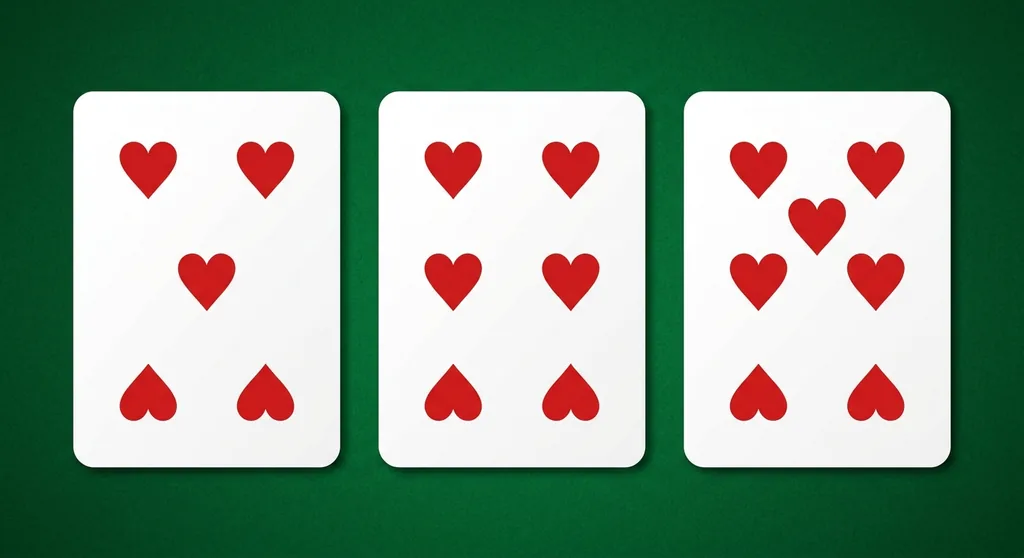
Goal
Score points by melding sets and runs onto the table, adding up card values as you go. The first player to reach a total of 500 points wins the match.
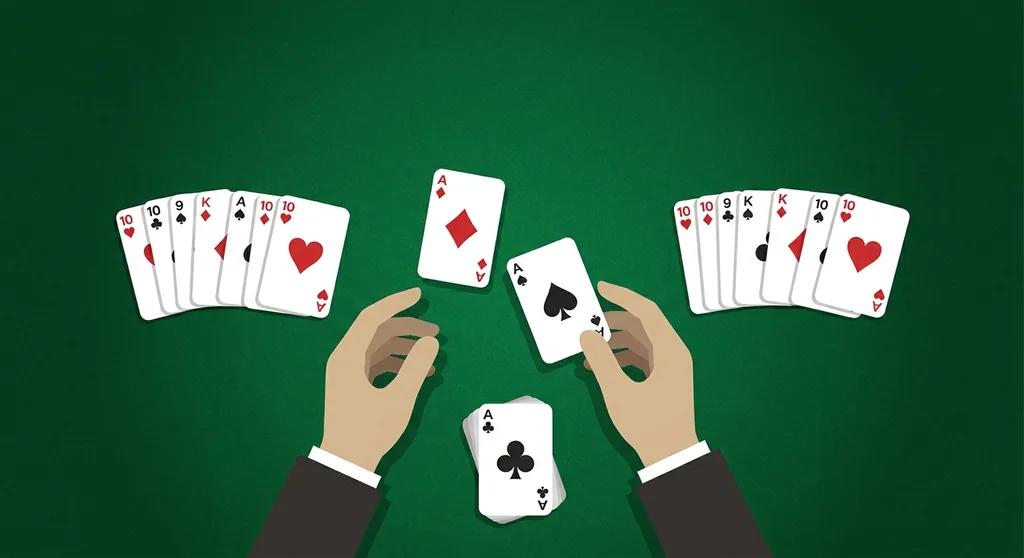
The deal
Deal from a single 52-card deck - often seven cards each with more players, more with just two. Turn one card up to start the discard pile and set the rest as the stock.
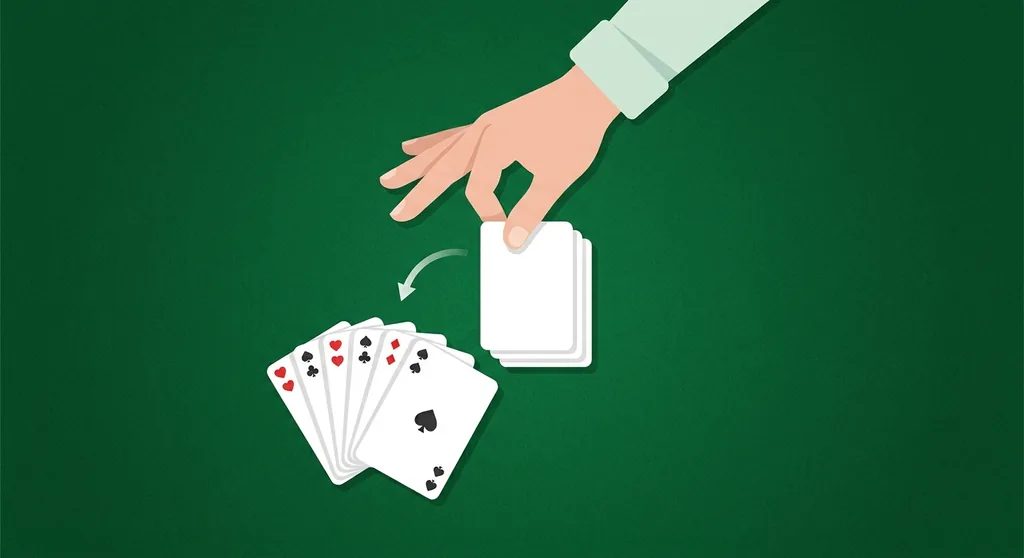
Draw or dig
Draw the top of the stock, or dig into the discard pile: take any card in it, but scoop every card above your pick into your hand and use the chosen card right away in a meld.
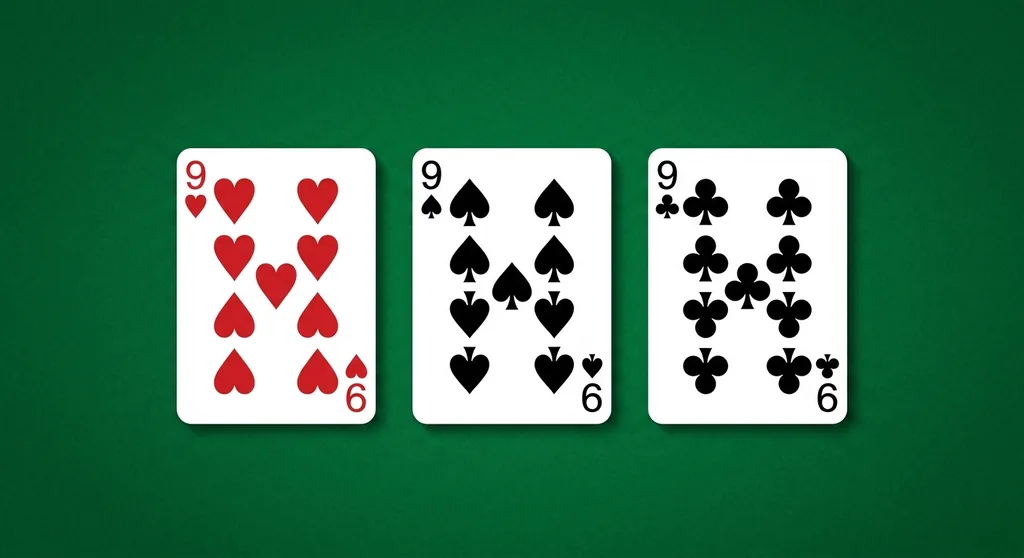
Meld sets & runs
Lay melds face up: sets of three or four matching ranks, or runs of three or more cards in sequence in one suit. Aces are low, so A-2-3 is a run but Q-K-A is not.
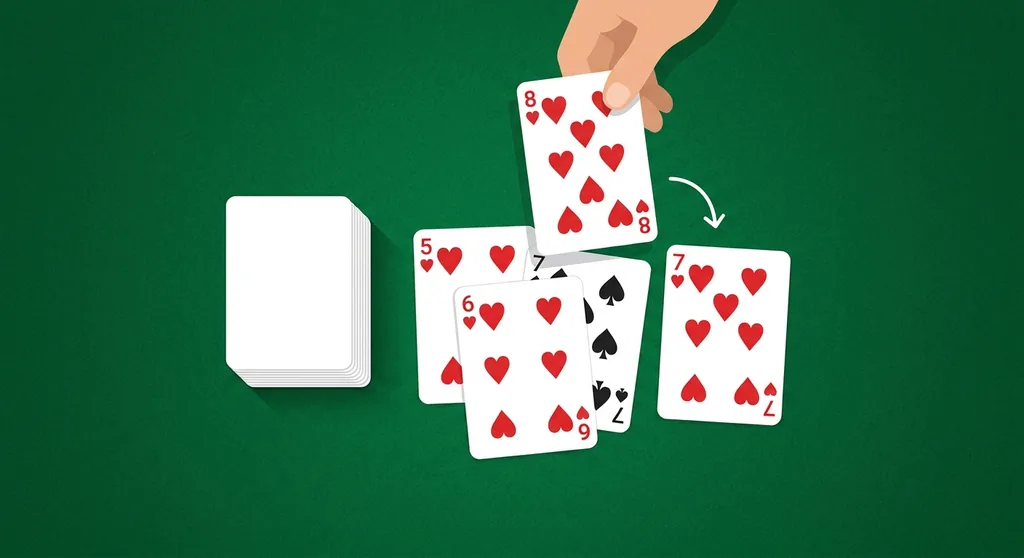
Lay off & go out
Lay off extra cards onto melds on the table, then discard to end your turn. When a player goes out or the stock is gone, everyone scores their melds and subtracts the deadwood left in hand.
History of 500 Rum
500 Rum is one of the most popular members of the Rummy family, which itself descends from the 19th-century game Conquian and, further back, from the wider tradition of draw-and-discard games. As basic Rummy spread across the United States in the early 20th century, players looked for ways to make it longer and more strategic, and adding a points target was a natural step.
The game's defining innovations were its scoring and its treatment of the discard pile. Rather than simply racing to empty your hand, players earned points for the cards they melded and played to a total of 500, which gave hands lasting consequences and allowed for comebacks. The rule permitting a player to reach deep into the discard pile - taking every card above the one they wanted - added a distinctive layer of tactics found in few other Rummy games.
500 Rum became a fixture of American family card play, known in various places as Pinochle Rummy or Michigan Rummy, and it comfortably accommodates anywhere from two to eight players. Its blend of familiar Rummy melding, running scores, and the memorable deep-dig rule has kept it in steady circulation for generations, both around kitchen tables and in the many card collections and apps that carry it.
How to Win 500 Rum: Strategy
💡 Top tip: Because you score for what you meld, lay down cards steadily rather than hoarding - points on the table are banked, points in your hand are at risk.
Winning tips, in order of importance
- Use the deep-dig rule to grab a buried card that completes a meld, but only when the cards you are forced to pick up above it are worth the haul.
- Watch your own deadwood near the end of a hand; face cards left in hand are subtracted, so shed them if a sudden out looks likely.
- Track the pile before you dig - taking ten extra cards to reach one is a bad trade unless several of them also fit your melds.
- Lay off onto existing melds to convert loose cards into scored points and to thin your hand.
- Keep an eye on the running total; near 500 you can play more conservatively, melding just enough to cross the line first.
- Deny opponents by not leaving an easy, shallow dig on top of the pile, and by discarding cards that are useless to the melds they are building.
Advanced tactics for 500 Rum
- Treat the table as the bank: because only melded and laid-off cards score, get points down steadily instead of hoarding a big hand that can be caught as deadwood.
- Dig into the pile only when the buried card completes a meld and enough of the cards above it also fit your plans, or the extra cards will bury you in deadwood.
- Keep a close eye on your own remaining deadwood as a hand nears its end, shedding high cards before an opponent goes out and freezes your score.
- Remember every card you scoop from the pile joins your hand, so a deep dig that nets one useful card and six dead ones is usually a losing trade.
- Lay off spare cards onto any melds on the table to turn otherwise idle cards into scored points and to shrink your hand.
- Manage the endgame against the 500 line: when you are close, meld conservatively to cross first rather than risking a big hand that could be caught short.
- Deny opponents by discarding cards that do not help the melds they are visibly building, and by not leaving an easy, shallow dig on top of the pile.
Common 500 Rum mistakes to avoid
- Hoarding a big hand for a giant turn - only melded and laid-off cards score, and deadwood left in hand is subtracted, so bank points steadily.
- Digging too deep into the discard pile - scooping ten cards to reach one is a losing trade unless several of them also fit your melds.
- Ignoring your own deadwood near the end - shed high cards before an opponent goes out and freezes your score with penalties in hand.
- Melding recklessly near 500 - when you are close to the target, play just enough to cross the line first instead of risking a big catchable hand.
500 Rum Variations
Basic Rummy
The simpler parent game, where you race to empty your hand rather than scoring to 500 and can only take the top card of the discard pile, not dig beneath it.
High-ace scoring
A common option in which aces are worth 15 points when melded and may be played high in runs, raising the stakes of ace-heavy hands; groups agree on it before play.
Persian Rummy
A close relative of 500 Rum that adds jokers as wild cards and scores four-of-a-kind sets heavily, played to a points total over a fixed number of deals.
Two-deck 500 Rum
Larger groups shuffle two decks together, which lengthens the discard pile and makes the deep-dig rule and the race to 500 even livelier.
Michigan and Pinochle Rummy
Regional names for essentially the same game, sometimes with small scoring tweaks, reflecting how widely 500 Rum traveled through American family card play.
500 Rum FAQ
What is 500 Rum?
500 Rum, also called Pinochle Rummy, is a scoring version of Rummy for two to eight players. You draw, meld sets and runs onto the table, and lay off just as in basic Rummy, but you score points for the cards you meld and race to a total of 500. Its signature rule lets you dig deep into the discard pile instead of taking only the top card.
How does digging into the discard pile work?
Instead of taking just the top discard, you may take any card in the pile - but you must pick up every card lying on top of it as well, and you must use your chosen card immediately in a meld you lay down that turn. It is a powerful way to grab a card you need, at the cost of a bigger hand.
How is 500 Rum scored?
You score the value of every card you meld or lay off: face cards count 10, number cards their pip value, and aces count 1 in the standard low-ace rule. At the end of each hand, the deadwood still in your hand is subtracted from your score. The first player to reach 500 total points wins.
How many cards are dealt in 500 Rum?
With two players many groups deal thirteen cards each, though seven is also common; with three or more players seven cards each is standard. The rest form the stock, and one card is turned up to start the discard pile. Agree on the deal size before you begin, since sources differ.
How is 500 Rum different from basic Rummy?
The two big differences are scoring and the discard pile. In 500 Rum you keep a running score for the cards you meld and play to 500, rather than just racing to empty your hand. And you may dig below the top of the discard pile to take any card, provided you pick up everything above it and meld your target immediately.
Can you play 500 Rum with more than two players?
Yes. 500 Rum is a popular family game precisely because it scales well, handling two to eight players and often using two decks for larger groups. With more players the discard pile grows quickly, which makes the deep-dig rule even more interesting and the scoring more of a scramble.
Are aces high or low in 500 Rum?
On this site aces are low, worth 1 point, and they sit below the 2 in runs, so A-2-3 is valid but Q-K-A is not. Some traditional 500 Rum rules let the ace be high and score 15 points when melded; groups that want that simply agree to it before the game starts.
What happens to cards left in your hand?
At the end of a hand, any cards you have not melded or laid off are deadwood and their value is subtracted from your score. Because you can actually go negative, holding high cards while hunting for one more meld is risky, especially if an opponent looks ready to go out.
When does a hand of 500 Rum end?
A hand ends when one player goes out by getting rid of all their cards, or when the stock runs out and no more plays are possible. Everyone then totals the value of the cards they melded and laid off, subtracts their remaining deadwood, and the running match score is updated toward 500.
Do you have to use the dug card right away?
Yes. The rule that makes deep digging fair is that your chosen card must be melded immediately, on the same turn you take it. You cannot dig into the pile just to stockpile cards; the target has to go straight into a set or run you lay down, though the extra cards you scooped up join your hand.
Why is it called 500 Rum?
The name simply reflects the goal: you play until someone reaches 500 points. The Rum part marks it as a member of the Rummy family, and the game is also known as Pinochle Rummy or Michigan Rummy in some regions. The 500-point target is what gives the game its length and its comeback potential.
Is 500 Rum a good game for families?
Very much so. Its rules build naturally on basic Rummy, it handles a wide range of players, and the running score keeps everyone involved across several hands. The deep-dig discard rule adds a memorable twist that even younger players enjoy, which is why 500 Rum has long been a household favorite.
500 Rum guides & strategy
Still have a question about 500 Rum? Browse the full gin rummy FAQ, look up a term like rummy family or family favorite in the gin rummy glossary, or compare 500 Rum with the other games in the rules for every game.
Last updated .