Play Straight Gin
No knocking allowed - you must go gin to win the hand.How to Play Straight Gin
In a nutshell: No knocking allowed - you must go gin to win the hand. You play with 1 deck (52 cards), it's rated high risk, high reward, and gin or nothing - patience is everything.
Straight Gin strips Gin Rummy down to its purest challenge: knocking is banned, so the only way to end a hand is to go gin. You still deal ten cards each, draw from the stock or discard pile, throw one card away, and build sets and runs - but there is no settling for a low deadwood count. You keep playing until one player melds all ten cards for zero deadwood, or the stock runs too low and the hand is washed. Because there are no cheap knocks, hands run longer and reward patience, memory, and reading your opponent. Every discard is a clue, every card counted is an edge, and holding the wrong high card to the end can cost you the whole hand's deadwood. The gin bonus still applies, undercuts cannot happen, and the match is played to the usual 100 or 500 points.
Straight Gin at a glance
| Goal | Meld all ten of your cards into sets and runs so you have zero deadwood - that is gin, and it is the only way to win a hand of Straight Gin. There is no knocking. |
|---|---|
| Decks used | 1 standard 52-card deck - 52 cards in play |
| Difficulty | High risk, high reward |
| Chance of winning | Gin or nothing - patience is everything |
| Family | Gin Family |
Step by step
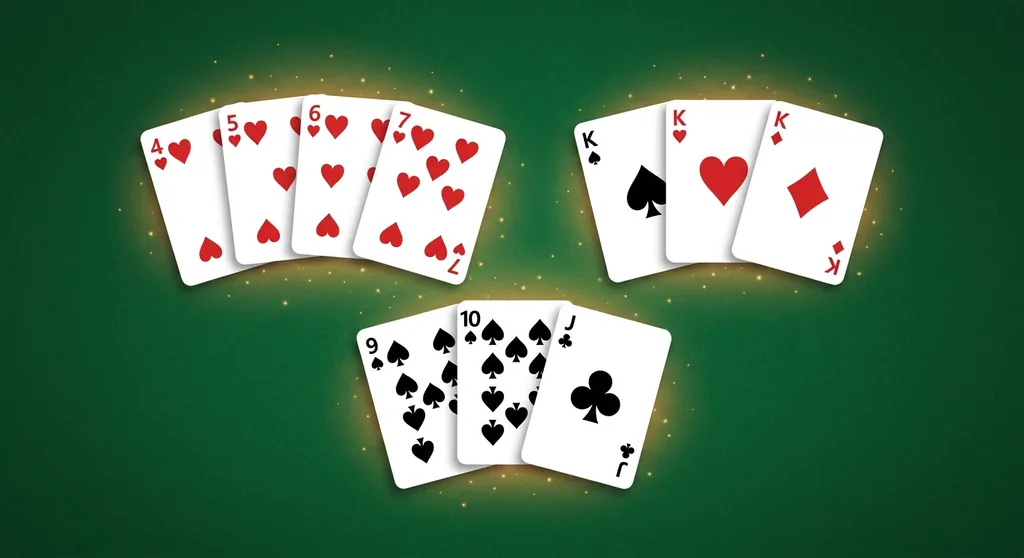
Goal
Meld all ten of your cards into sets and runs so you have zero deadwood - that is gin, and it is the only way to win a hand of Straight Gin. There is no knocking.
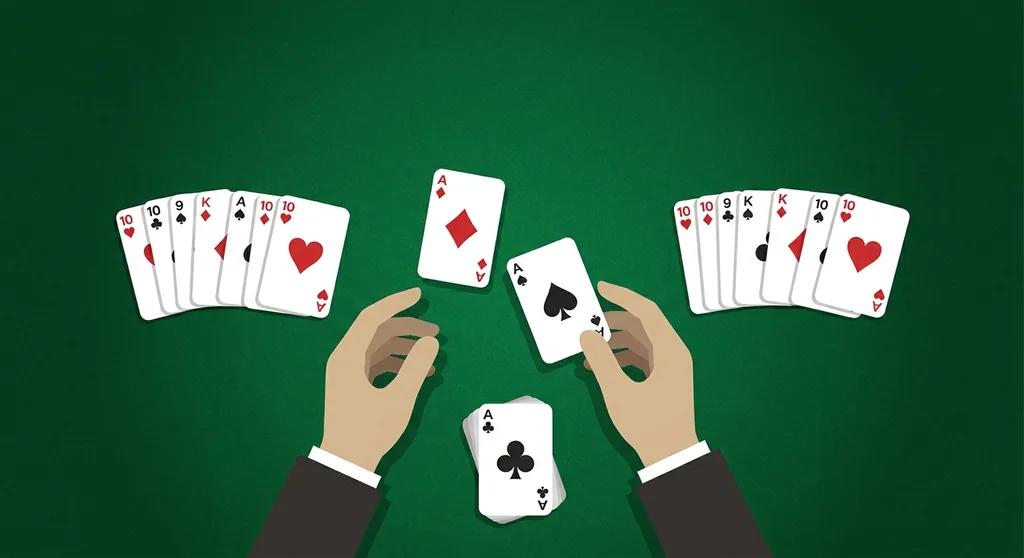
Deal & upcard
Deal ten cards to each player and flip the 21st card face up beside the stock as the first upcard. The non-dealer decides first whether to take it or pass.
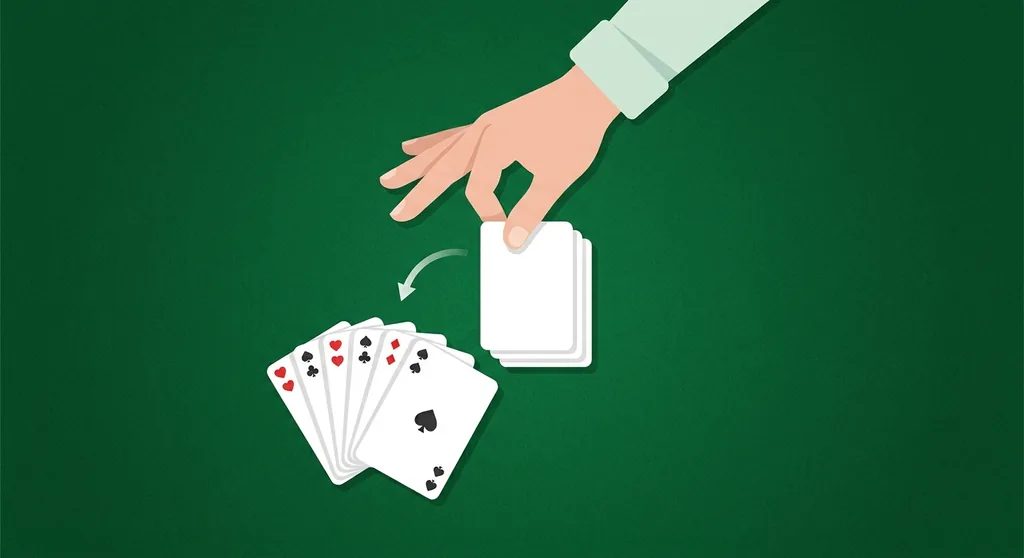
Draw or discard
On your turn, draw from the stock or take the upcard, then discard one card. Your hand stays at ten cards, and you keep going until someone reaches gin.
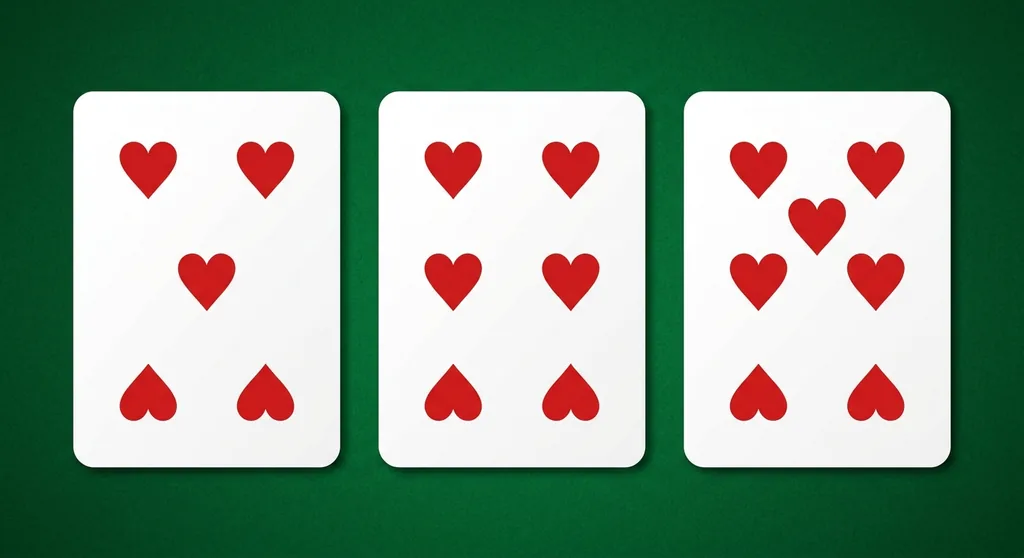
Melds
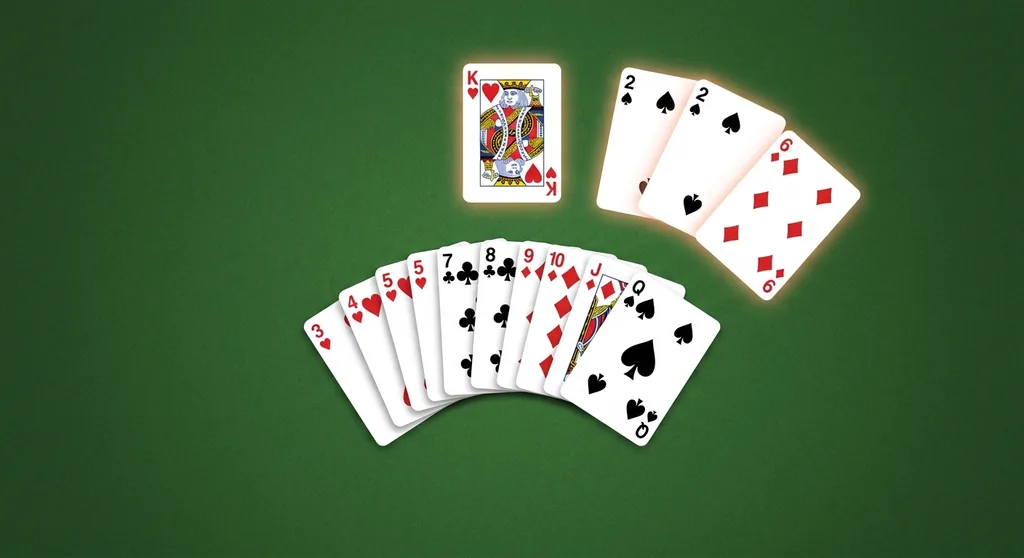
A set is three or four cards of one rank; a run is three or more cards in sequence in a single suit. Aces are low, so A-2-3 is a run but Q-K-A is not. Every card must eventually belong to a meld.
Deadwood
Deadwood is any card not yet in a meld. In Straight Gin you cannot knock with leftover deadwood - you must drive it all the way to zero. If the stock runs low before anyone does, the hand is a draw.
History of Straight Gin
Straight Gin is a variation of Gin Rummy, the two-player game invented in New York in 1909 by Elwood T. Baker and his son C. Graham Baker. As Gin Rummy spread across America in the 1930s and 1940s, players developed house rules that changed how a hand could end, and the strictest of these simply removed the knock, insisting that only a full gin could win.
The appeal of the no-knock rule is easy to understand. Standard Gin lets a cautious player knock at a deadwood of 10 for a small, safe score, which some found too tame. By forbidding the knock, Straight Gin forces both players to commit to melding their entire hand, turning every deal into an all-or-nothing race and rewarding the deeper skills of counting and patience.
Like all members of the Gin family, Straight Gin descends from the older Rummy games rooted in 19th-century Conquian and the wider draw-and-discard tradition. It sits alongside standard Gin and Oklahoma Gin as one of the three classic ways to play, chosen by players who want the tension of holding out for a perfect, fully melded hand rather than the safety of an early knock.
How to Win Straight Gin: Strategy
💡 Top tip: Patience wins Straight Gin - since only gin ends the hand, resist forcing plays and build methodically toward a full meld.
Winning tips, in order of importance
- Hold flexible, two-way cards; you need every one of your ten cards to meld, so cards with a single use are the first to become dead ends.
- Count the discards religiously - knowing which cards are gone tells you which of your intended melds can still be completed.
- Discard high cards early only when they clearly cannot meld; a stranded 10-point card at the end of a washed hand is pure loss.
- Watch what your opponent picks up - in a long Straight Gin hand there is time to read their whole plan and deny them key cards.
- Keep your discards safe late in the hand, throwing cards whose partners are already gone rather than live cards near your opponent's melds.
- Race the stock: because hands can wash to a draw, aim to reach gin before the deck thins out, and abandon a broken plan early rather than late.
Advanced tactics for Straight Gin
- Commit to a fully melded hand from your first draw; without the safety of a knock, half-finished plans that would win in standard Gin simply lose here.
- Prize two-way cards above all, because reaching zero deadwood means every one of your ten cards must find a home in a set or a run.
- Keep a precise count of the discards - in a long Straight Gin hand, knowing which melds are dead is the difference between adjusting in time and stalling.
- Read your opponent's pickups over the whole hand; the extended play gives you more information than standard Gin, so use it to starve their melds.
- Shed genuinely dead high cards early, since a wash leaves you holding their full value, and a 10-point card you never needed is the most painful loss.
- Choose safe discards near the end, throwing cards whose mates are already gone rather than feeding a live card into your opponent's near-complete hand.
- Mind the shrinking stock: if your plan has broken and gin looks unreachable, pivot toward denying your opponent rather than chasing a hand that can only wash.
Common Straight Gin mistakes to avoid
- Playing for a low knock out of habit - knocking is banned in Straight Gin, so half-finished hands that would knock in normal Gin simply lose here.
- Clinging to dead high cards - if the hand washes you keep their full value, so shed unmatched face cards early rather than hoping they connect.
- Not counting the discards - in a long Straight Gin hand, knowing which melds are dead is how you pivot in time instead of stalling.
- Racing without watching the stock - if gin looks unreachable as the deck thins, switch to denying your opponent rather than chasing a hand that can only draw.
Straight Gin Variations
Standard Gin Rummy
The parent game, where knocking at a deadwood of 10 or less lets you end a hand early. Straight Gin removes only that option, keeping every other rule the same.
Oklahoma Gin
Another Gin variation where the upcard sets a variable knock limit. When that upcard is an ace, Oklahoma effectively becomes Straight Gin for that hand, since only gin can win.
Big Gin bonus
Some Straight Gin tables reward melding all eleven cards, including the one just drawn, with a larger bonus than a standard ten-card gin, adding an extra target to chase.
Match target 100 or 500
As in all Gin, groups choose whether to race to 100 points for a quicker session or play the traditional 500 with box and game bonuses for a longer match.
Partnership Straight Gin
Played with four in two teams, where partners' results are combined each hand; the no-knock, gin-only rule carries over unchanged to the team format.
Straight Gin FAQ
What is Straight Gin?
Straight Gin is a variation of Gin Rummy in which knocking is not allowed. The only way to win a hand is to go gin - to meld all ten of your cards into sets and runs so that you have zero deadwood. Because there are no low knocks to end things quickly, hands tend to run longer and reward patience.
How is Straight Gin different from regular Gin Rummy?
In standard Gin you can knock as soon as your deadwood is 10 or less, ending the hand early. Straight Gin removes that option: you must reach zero deadwood and go gin. Everything else - the deal, drawing, discarding, melds, and the gin bonus - stays the same, but the strategy shifts toward patience and card counting.
Can you be undercut in Straight Gin?
No. Undercuts only happen when a player knocks, and knocking does not exist in Straight Gin. Since the only way to end a hand is by going gin, there is no knocker for a defender to undercut. This removes one of standard Gin's biggest risks but replaces it with the challenge of reaching gin at all.
What happens if neither player goes gin?
If the stock runs down to its last couple of cards and no one has gone gin, the hand ends in a draw, often called a wash. No points are scored and the cards are re-dealt. This makes racing to gin before the deck thins an important part of Straight Gin strategy.
Do you still lay off in Straight Gin?
Laying off normally happens after a knock, adding your unmatched cards to the knocker's melds. Since Straight Gin has no knocking and the winner goes gin with zero deadwood, there is typically nothing to lay off - the hand simply ends when someone melds all ten cards.
Is Straight Gin harder than standard Gin?
It is more demanding in a different way. You cannot bail out with a safe low knock, so you must commit to completing every meld, which raises the value of patience, memory, and reading your opponent. Many players find the higher risk and the all-or-nothing finish make it a purer test of skill.
How do you score Straight Gin?
The player who goes gin scores their opponent's full deadwood plus the standard 25-point gin bonus. Because the loser rarely has a chance to trim their hand at the end, deadwood counts can be large, so single hands often swing more points than in standard Gin. Matches still run to 100 or 500.
Are aces high or low in Straight Gin?
Aces are low, worth 1 point. In runs the ace sits below the 2, so A-2-3 of a suit is a valid run while Q-K-A is not. This matches standard Gin Rummy, since Straight Gin changes only the way you are allowed to end a hand.
Why would anyone play without knocking?
Removing the knock takes away the safe, low-scoring exit that some players find anticlimactic. Without it, every hand becomes a full race to gin, which rewards careful planning and makes the eventual win feel earned. Fans enjoy that Straight Gin turns Gin Rummy into a higher-stakes, more patient game.
What is the best strategy for Straight Gin?
Build toward a completely melded hand from the start, favor cards that can meld two ways, and count the discards so you know which melds are still possible. Discard safe cards late, watch your opponent's pickups closely, and try to reach gin before the stock thins out and forces a draw.
Does Straight Gin use the gin bonus?
Yes. Going gin earns the same 25-point bonus as in standard Gin Rummy, on top of the opponent's deadwood. Since gin is the only way to win a hand, that bonus is applied every single time a hand is decided, which is one reason scores can climb quickly.
How many cards and players does Straight Gin use?
Straight Gin is a two-player game using one standard 52-card deck, with ten cards dealt to each player, exactly like Gin Rummy. The 21st card becomes the first upcard, the rest form the stock, and play proceeds with drawing and discarding until one player melds all ten cards.
Straight Gin guides & strategy
Still have a question about Straight Gin? Browse the full gin rummy FAQ, look up a term like gin family or high risk, high reward in the gin rummy glossary, or compare Straight Gin with the other games in the rules for every game.
Last updated .